Posts

Showing posts with the label investment

UK Labour Party manifesto pledges for financial services industry

Image
Labour now have the big majority the polls predicted and as ever a change in government provokes both caution and hope among the investment community as it considers how it might be impacted by a change in government policy. It is early days for the new government but we do have the pledges in Labour's manifesto to review to understand their approach to financial services. Let's run through them.  Pledge 1.  "Deliver inclusive growth of the UK’s financial services sector by scalling regional financial centres alongside established hubs in London and Edinburgh and unlocking the full potential of the mutuals sector." If we ignore the spelling mistake, this is similar in principle to what the Conservatives called 'levelling up' and may provide local opportunities for growth.  Pledge 2.   "Enhance the international competitiveness of the UK’s financial services sector by pursuing a more joined up and innovation-centred approach to regulation and supervision, ...

What might be the impact of UK election on your investments?

Image
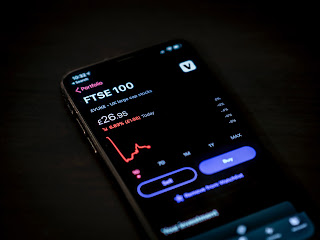
So, Labour have returned to power in the July 2024 UK election with a huge majority, if not a corresponding share of the popular vote thanks to the quirks of the first past the post system in the UK. Naturally this change in government leads to concerns among investors as to how their investments will fare within the UK, notwithstanding the wider global context of instability with the US election later in the year and ongoing troubles in Ukraine and the Middle East.  Throughout the campaign Kier Starmer has stressed his desire for growth and to try to reassure voters that the economy is in safe hands with Labour. Encouraging sounds in principle. So, how should you react? Despite Brexit the UK economy is still very much subject to the wider changes in the world and the markets have known for a long time that a Labour majority was highly likely so will have factored that change in already. Also on the cards are signs of a closer approach to the EU, albeit one short of rejoining the C...

The stock market explained

Image
The stock market is a familiar term to any casual investor, but what is it exactly?   The stock market is a financial market where securities, such as stocks and bonds, are bought and sold. It is a crucial part of the global economy, as it provides companies with access to capital, and it allows investors to earn returns on their investments. There are many different stock markets around the world, and they can be broadly classified into two main categories: primary markets and secondary markets. Primary markets are where new securities are issued and sold to the public for the first time. Companies looking to raise capital will often issue new stocks or bonds, and these securities are then sold to investors through a primary market. The proceeds from the sale of the securities are used by the company to fund its operations and growth. Secondary markets are where existing securities are bought and sold among investors. Once securities have been issued in a primary market, they are ...

What's a good general approach to investment strategy for private investors?

Image
Of course we have to start this article with all manner of disclaimers about doing your own research, but let's try to answer it as best we can... A good investment strategy for private investors will vary depending on the individual's financial goals, risk tolerance, and other factors. However, there are a few general principles that can help investors develop a successful investment strategy. One important principle is to diversify your investments. This means not putting all of your money into one type of investment, or into one specific company or sector. Diversification can help to reduce the risks associated with any individual investment, and it can also help to smooth out the ups and downs of the overall market. By spreading your money across different types of investments, you can increase the chances that at least some of your investments will perform well, even if others don't. Another important principle is to invest for the long term. This means looking beyond ...

What are EPS (Earnings Per Share)?

Image
EPS - Earnings Per Share - explained EPS is an acronym that stands for Earnings Per Share . It is a financial metric that is commonly used by analysts and investors to evaluate the profitability of a company. EPS is calculated by dividing a company's net income by the number of shares outstanding, and it is expressed as a dollar amount per share. EPS is an important metric for investors in stocks because it provides a measure of a company's profitability on a per-share basis . This allows investors to compare the profitability of different companies, and to evaluate the potential return on their investment in a stock. EPS is also an important metric for analysts and investors because it is used in the calculation of several other financial ratios, including the price-to-earnings (P/E) ratio and the price-to-earnings growth (PEG) ratio. The P/E ratio is calculated by dividing a company's stock price by its EPS, and it is a commonly used measure of a company's valuation....

What does GAAP mean?

Image
You may have seen the term GAAP in relation to a company's accounts, but what does it stand for and what does it mean? GAAP is an acronym that stands for Generally Accepted Accounting Principles .  It is a set of accounting standards and guidelines that provide a consistent framework for companies to follow when preparing their financial statements. GAAP is intended to ensure that companies present their financial information in a transparent and consistent manner, so that investors and other stakeholders can accurately compare the financial performance of different companies. GAAP is issued by the Financial Accounting Standards Board (FASB) and is followed by most publicly-traded companies in the United States. It is also widely adopted by private companies, and it is often used as a benchmark for international accounting standards. In the UK, 'Generally Accepted Accounting Practice in the UK' (UK GAAP) is the body of accounting standards published by the UK’s Financial R...

What is Warren Buffet's investment strategy?

Image
You may have heard of the 'Sage of Omaha', the legendary investor Warren Buffet, but what is his investment strategy? Let's start with who he is and try to summarise his approach. Warren Buffett is a famous American investor and the CEO of Berkshire Hathaway, a multinational conglomerate holding company. He is widely regarded as one of the most successful investors in history, and his investment philosophy has been studied and followed by many people around the world. One of the key principles of Buffett's investment strategy is his focus on long-term value investing. This means that he looks for companies that have strong, sustainable competitive advantages, and that are trading at a price that is lower than their intrinsic value. He believes that these companies are likely to generate strong returns over the long term, and he is willing to hold onto them for many years in order to reap the benefits of their growth. Another important aspect of Buffett's investment ...

Should you invest in cryptocurrency?

Image
Cryptocurrency has had a very mixed press recently with a series of falls and scandals, but should you consider it as part of your investment portfolio? It is definitely not for everyone and has a very high risk profile. It's difficult to give a definitive answer on whether or not you should invest in crypto because it ultimately depends on your personal financial situation and investment goals. Investing in crypto, like any other investment, carries risks and potential rewards, and it's important to carefully consider these factors before making a decision. One potential benefit of investing in crypto is that it has the potential for high returns. Many cryptocurrencies have seen significant price increases in recent years, and some investors have made substantial profits by investing in them. However, it's important to keep in mind that the value of cryptocurrencies can also fluctuate dramatically, and there is no guarantee that you will make a profit by investing in them....

What does a stock's 'yield' mean?

Image
You may have noticed a stock's 'yield' when looking at its financial data, but what exactly does this mean? A yield is a measure of the income that an investor can expect to receive from a stock, expressed as a percentage of the stock's price. For example, if a stock has a yield of 2%, and its price is £100 per share, an investor can expect to receive £2 in annual income from that stock. The yield of a stock is determined by the amount of income that the stock generates, divided by its price. For example, if a stock pays out $1 in dividends per year and its price is £100, its yield would be 1%. If the price of the stock increases to £200, its yield would drop to 0.5% because the same amount of income is now being divided by a higher price. The yield of a stock is an important factor for investors to consider when evaluating the potential return on their investment. In general, stocks with higher yields are considered to be more attractive to income-oriented investors, w...

What is EBITDA?

Image
You may have heard the term EBITDA, but what does it stand for and what does it mean? EBITDA is a financial acronym that stands for Earnings Before Interest, Taxes, Depreciation, and Amortization . It is a measure of a company's profitability that is calculated by adding back these non-cash expenses to net income. This provides a more accurate picture of a company's underlying performance and financial health, because it excludes the effects of certain non-operating expenses and accounting decisions. The purpose of EBITDA is to provide a more accurate and consistent measure of a company's profitability. This is because net income can be affected by a wide range of factors, including interest expenses, taxes, and non-cash expenses like depreciation and amortization. By adding these expenses back to net income, EBITDA provides a more consistent and comparable measure of a company's profitability over time. EBITDA is often used by analysts and investors to compare the fin...

What is a hedge fund?

Image
You may have heard the term 'hedge fund', but what are they and how do they work? A hedge fund is a type of investment vehicle that is typically used by wealthy individuals and institutional investors to invest in a diverse range of assets, including stocks, bonds, currencies, commodities, and real estate. Hedge funds are typically managed by professional money managers who employ a variety of investment strategies in an attempt to generate high returns for their investors, while also attempting to minimize risk. One of the key features of hedge funds is their use of leverage, which refers to the practice of using borrowed money to increase the potential return on an investment. This means that hedge funds can potentially generate higher returns than traditional investment vehicles, but it also means that they can be more risky. Another important feature of hedge funds is their lack of regulation compared to other investment vehicles. Unlike mutual funds, which are subject to s...

What is a tracker fund?

Image
You may have heard of tracker funds as a relatively low risk way to invest, but what are they exactly? A tracker fund is a type of investment fund that aims to track the performance of a specific market index, such as the S&P 500 or the FTSE 100 . Tracker funds are also known as index funds or passive funds. Tracker funds are managed by investment professionals who use algorithms and other tools to mimic the performance of the underlying index. Unlike actively-managed funds, which are managed by professional stock pickers who try to outperform the market, tracker funds do not attempt to beat the market. Instead, they aim to match the performance of the index they are tracking as closely as possible. Tracker funds offer investors several advantages. Because they are passively-managed, they typically have lower fees than actively-managed funds. This means that investors can keep more of their investment returns. Tracker funds are also considered to be more diversified than actively-...

What is the FTSE 100?

Image
Like the S&P 500 , the FTSE 100 is a common element of tracker funds, but what is it exactly? The FTSE 100 is an index that represents the performance of the 100 largest companies by market capitalization that are listed on the London Stock Exchange. These companies are chosen based on their market size, liquidity, and industry group. The index is widely regarded as a good indicator of the overall performance of the UK stock market. The index is calculated by FTSE Group, which is a subsidiary of the London Stock Exchange Group. The index is updated every 15 seconds during trading hours, and the value of the index is calculated using the prices of the individual stocks that make up the index. The FTSE 100 was first launched in 1984 with a base value of 1,000. Since then, it has grown to become one of the most widely-followed stock market indices in the world. The index is seen as a bellwether for the UK economy, and many investors use it as a benchmark for their own investment portf...

What is the S&P 500?

Image
The S&P 500 is a common component of many investor's portfolios, particularly as part of tracker funds, but what exactly is it? The S&P 500 is a stock market index that tracks the performance of 500 large publicly traded companies in the United States. The companies in the index are selected by Standard & Poor's, a financial services company, based on various criteria such as market capitalization, liquidity, and sector representation.  The index is calculated based on the market capitalization of the companies in the index and the performance of their stocks. This means that the larger and more valuable a company is, the more influence it has on the index. The S&P 500 is considered to be a good measure of the overall health of the U.S. stock market, as it represents a diverse range of companies from different sectors of the economy. It is one of the most widely followed stock market indexes in the world, and many investors use it as a benchmark for their invest...

Reason for cautious optimism - global economy forecast to grow 4% in 2021

Image
With lockdown still in place in many countries around the world, it may be hard to look to the future and feel optimistic about the prospects for the global economy. However, data from the World Bank (January 2021) states that the global economy is expected to grow by 4% in 2021. This forecast comes with the assumption that the Covid-19 vaccine rollout is as expected. It is worth reviewing this data alongside the decrease in the global economy in 2020 which showed a contraction of 4.3% (World Bank, January 2021). This means that the overall size of the global economy would remain slightly under its previous levels, albeit on a more positive trajectory.  The World Bank take the view that the contraction in the global economy was 'slightly less severe than previously projected' which was down to advanced economies been less badly hit than expected along with a 'more robust' recovery in China.  They do offer the caveat that should the vaccine rollout be delayed then they o...

Impact of Coronavirus on 10-year US Treasury yields - charts and trends

Image
2020 saw many records in the investment markets and the 10-year US Treasury yields were no exception as they saw record lows. If we look at the data over the last year in the chart below (source: CNBC), then the impact of Coronavirus from February 2020 is clear. A sharp dip into March 2020 and then a slow, steady recovery from August 2020, but not the same recovery to previous levels and beyond that we have seen in many of the stock markets.  Indeed, if we look at the longer term trends going all the way back to the 1980s, then 2020 saw record lows as per the chart below (source: CNBC). The chart also illustrates the longer term trend with a steady decline in the yields over the past forty years (the thought of a peak 15% yield back in the early 80s, where could you find that kind of yield these days!). Looking at the longer term trends you may believe that the yields cannot get much lower and then a continued steady recovery is the likely way forward.  But, as ever, in the cu...

Best and worst performing UK FTSE All-Share sectors in 2020

Image
What a year 2020 was for investing.  Record-breaking lows, recoveries, logic, panic and confusion all thrown together with fortunes made and lost. A pandemic, Brexit and a sometimes chaotic US Election made for a perfect storm in instability. But now the dust is settling which sectors fared best and worst and more importantly why?  Let's look at the UK in this article. Data from IG  from H1 2021 (Jan-July) shows the disparity between sectors in the FTSE All-Share: Sector                                    Average share price return Healthcare                          +5.1% Materials                                    -1.8% Information technology      -2.1% Utilities ...

There may be bumps ahead - investing in 2021

Image
What should your investment strategy be going into 2021? It's been an incredible year for investing with record daily falls as well as rises, a pandemic, a US Election and of course Brexit still yet to be resolved with the end of year deadline looming and as yet no deal. If ever there was a year for hindsight this was it. The opportunities were endless both to short the falls and ride the highs, but it was a brave investor that sought them, let alone timing them right.  However, some clear trends were in play. As the pandemic spread, the fear-based pricing built into markets was always likely to lead to a readjustment and in the same way when word of a potential vaccine grew a sharp rebound was probable. As ever, fortunes were made and lost. Going forward is, as ever, tricky. The long term effects on economies and particularly unemployment will remain in place in 2021, even if we get the record bounce that many are predicting as the world slowly gets back to normal.  But what ...

Sectors most affected by the Covid pandemic and the outlook

Image
It is a tricky time for investors at the moment to say the least. After one of the longest bull markets in history, the pandemic crisis caused huge disruption with sweeping share movements affecting individual stocks and sectors alike. There were some significant losers, including a swathe of high street closures, but also some dramatic gainers as the impact of Covic shook all parts of the marketplace and workforce. The biggest risers In terms of the biggest risers, let's look at the data from the FTSE-All Share from January to March 2020 as the first lockdown kicked in. Suppliers of the basic commodities and services fared best in the markets as society slipped down Maslow's Hierarchy of Needs towards the essentials. The world retreated inwards and once the supply chain could be secured the market reacted accordingly. Top of the sectors according to the IFS (Institute for Fiscal Studies) were the Food & Drink retailers, followed by Personal Goods, Medicines, Gas & Wate...

What to make of the current market uncertainty in 2020

Image
There are no two ways about it - 2020 has been an incredibly turbulent year for the markets. A pandemic, a US election and an uncertain Brexit still looms large to cap the year. So, what approach should you take in the current situation? Markets - emotion and fundamentals Markets have both their fundamentals and a human-led emotional bias.  In terms of emotional bias, there is a tendency to overreact to both bad news and good news, hence the huge swings when the prospect of lockdown loomed and the huge spike when news of a vaccine broke even though the impact will be medium term at the least. There are contract investors who invest when the market suffers a huge dip and sell when the market is peaking. Of course, it's impossible to pick those peaks and troughs accurately.  While it may be tempting to keep all your money under your mattress in 2020, it is worth having a look at the history of markets and then to see the opportunities available. The history of markets strongly s...